The 1970s were a great time for crime films. America has always been cinematically obsessed with gangsters, criminals, and outlaws, but the 1970s saw a rise in films that dealt with those matters, most likely due to the political and social climate of the times. (For a full American History lesson, pick up a book). Unfortunately, a lot of these crime films would go unnoticed and slip through the cracks in a decade that saw various powerhouse films see release like
Dirty Harry (1971),
The French Connection (1971),
The Godfather (1972), and
Taxi Driver (1976). One of these overshadowed 70s crime thrillers was
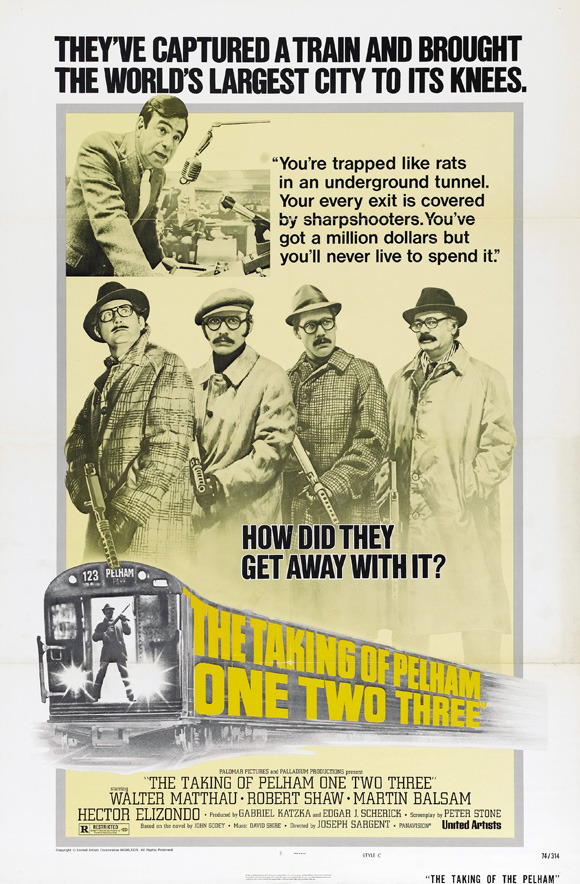
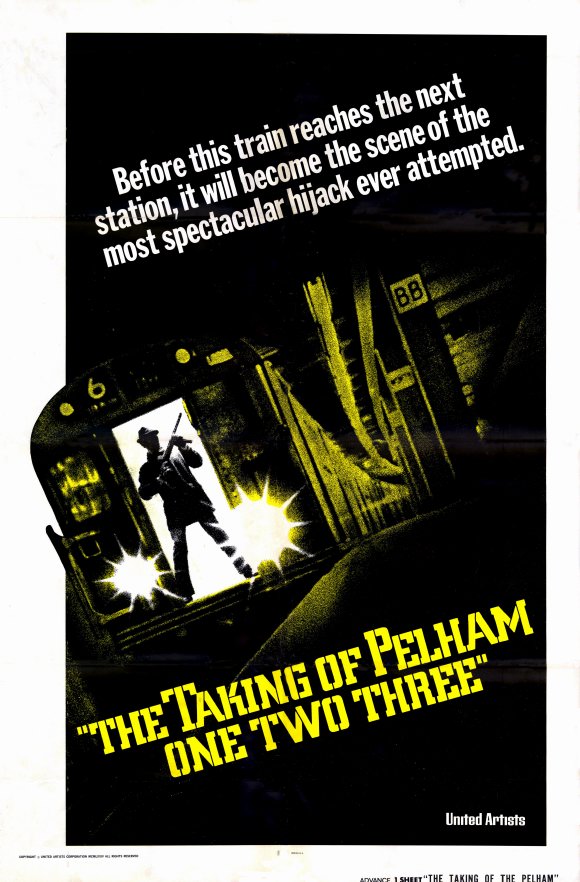
The Taking of Pelham One Two Three (1974), and it is a great little film, full of suspense, humor, and a great look at a New York City that doesn't exist anymore.
Hop aboard, the train is leaving the station.
It's just any other day on the New York City subway, except today four men, all wearing mustaches, trenchcoats, hats, and glasses, board a subway car and manage to hijack the whole thing, separating it from the rest of the train and essentially holding the 17 passengers hostage, demanding 1 million dollars in cash delivered within one hour. If their demands are not met, they will begin executing the passengers. Lt. Zachary Garber (Walter Matthau) of the Transit Authority must negotiate with the hijackers, as well as with various city officials, in a race against time. The movie becomes a tense waiting game as the authorities try to coordinate with one another, figuring out their plan of action, while trying to guess what the hijackers ultimate strategy is. After all, how do you hijack a subway car?
Answer: with a meticulously crafted plan.
The hijackers all have color coded names. Mr. Blue (Robert Shaw) is the leader of the group, a calm and calculated man. He has a military background and has hired two thugs, the stuttering yes-man Mr. Brown (Earl Hindman) and the loose cannon Mr. Grey (Héctor Elizondo), to assist him. Rounding out the group is the guy with the inside knowledge of the subway system, Mr. Green (Martin Balsam), who is suffering from a bit of a cold. Their unfamiliarity with one another leads to some internal strife and some bickering, which puts the hostages further on edge.
Lt. Garber has the duty of trying to corodinate and communicate with different people at various levels of the city government. Since this is the 1970s, this is all done with radios, telephones, CBs, things like that. What I'm getting at is that it takes
time, a commodity the hostages don't have much of. Garber has to talk to Subway Police Lt. Rico Patrone (Jerry Stiller) who then has to call the Transit Manager, a surly fellow by the name of Caz Dolowicz (Tom Pedi), while Garber calls the Police Commissioner (Rudy Bond), who then coordinates with Inspector Daniels (Julius Harris) and the Borough Commander (Kenneth McMillian). The Mayor (Lee Wallace), home sick in bed with the flu, is brought the news by Deputy Mayor Warren LaSalle (Tony Roberts), while Garber organizes his people (like loud mouthed Frank [Dick O'Neill]) on his end and keeps in communication with the hijackers.

This struggle to communicate and organize between these multiple parties and viewpoints is what drives the tension and suspense of the story. The only alleviation comes from the stream of humor that runs through the film, which also serves to strengthen the depth of the characters (without cracking jokes, all the characters would seem like tightly wound jerkasses). Also, and this is pretty important, the humor is usually pretty funny, but never distractingly so. Jerry Stiller has a couple good one-liners, but he never gets to unleash his
"Costanza yell."
Lt. Garber is introduced in a humorous fashion, as his first scene involve him giving a tour of the Transit Authority (and thus, a tour given to the audience) to a group of visiting Japanese business men. They shuffle about, taking picutres as Garber points out this and that, but Garber gets the impression that they don't speak English, so he starts feeding them some nonsense and drops a few insults. He's only saved from this situation when the hijackers make their first move on the subway car, but Garber isn't saved from his own embarrassment.
Once the hijacking goes down though, Garber gains a no-nonsense attitude. He becomes focused and you can see his mind turning, looking for answers and clues as to who is doing this and how they plan on getting away with it. He makes a good foil to go up against Mr. Blue, who has a similar steely determination. Garber is a gruff guy (the scene where he chews out Frank is a standout), but he keeps his wits about him and his sense of humor remains intact until the end.
Cinematically speaking, the New York subway system was a scary place in the 1970s. Films like
Death Wish (1974) and
The Warriors (1979) played up the more dangerous and seedy aspects of life below the streets and the loud, bustling setting makes a great location for a thriller. It's grungy, dark, and full of all types of weirdos and working class individuals.
Pelham One Two Three would mostly be shot on location (only the Transit Authority control center was reconstructed on a soundstage) and would take full advantage of these street locales and it is a cool look at 1970s New York. The hostages themselves are a cross-section of New York life, with screen credits like "The Pimp," "The Delivery Boy," The Old Man," "The Homosexual," and the formidable duo of "Co-ed #1" and "Co-ed #2." Despite these generic monikers, the hostages all display their own bits of grit of fortitude, enduing their characters with as much humanity and depth as one could with such limited screen time.
The filmmaking is tight and non-flashy and director Joseph Sargent manages to keep the movie flowing at a good pace. With this many characters, locations, and with a "high concept" premise (for the early 70s), this film, in the hands of a less capable director, might of been a mishmash of elements without any value to it. Sargent was mainly a director of TV movies, but in the 70s and 80s he managed to get behind a few feature films, including directing Burt Reynolds in the fun moonshine-actioner
White Lightning (1973) and Michael Caine in the terribly dreadful
Jaws: The Revenge (1987), which would be Sargent's final theatrical film.
One of the most successful elements of the film is the musical score by David Shire. It's a big and bombastic orchestral work with lots of percussion and brass and the bustling bigness of it reflects the city life of NYC. The score really drives the action at times and the ending is punctuated perfectly by the return of the main theme. David Shire was married to Talia Shire (sister to Francis Ford Coppola) for most of the 70s, so naturally he composed a score for one of Coppola's movies, which turned out to be one of his (and Coppola's) best:
The Conversation (1974). Other notable scores by David Shire include
All the President's Men (1976),
Straight Time (1978),
Return to Oz (1985),
Monkey Shines (1988), and
Zodiac (2007). He would win an Oscar for the Sally Field union drama
Norma Rae (1979).
Cinematographer Owen Roizman also shot William Friedkin's
The French Connection (1971) and
The Exorcist (1973), the former which surely led to his hiring on
Pelham One Two Three (the latter of which is just awesome). He would also shoot
Three Days of the Condor (1975),
Network (1976),
Straight Time (1978), and
Tootsie (1982).
The Taking of Pelham One Two Three was based on a popular book of the same name by John Godey. Screenwriter Peter Stone also wrote
Charade (1963), which starred Audrey Hepburn and. . . Walter Matthau.
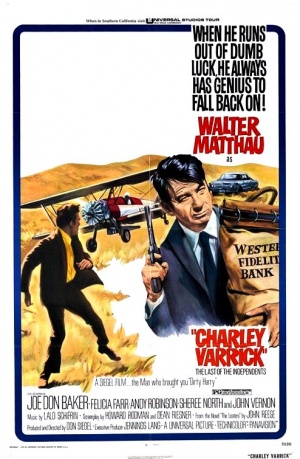
Good ol' Walter Matthau is pretty great in this. He's the smarmy everyman hero, with a bit of a chip on his shoulder. The final look he gives at the end of the film is pure gold. Matthau plays Lt. Garber in a hard-lined manner similar to
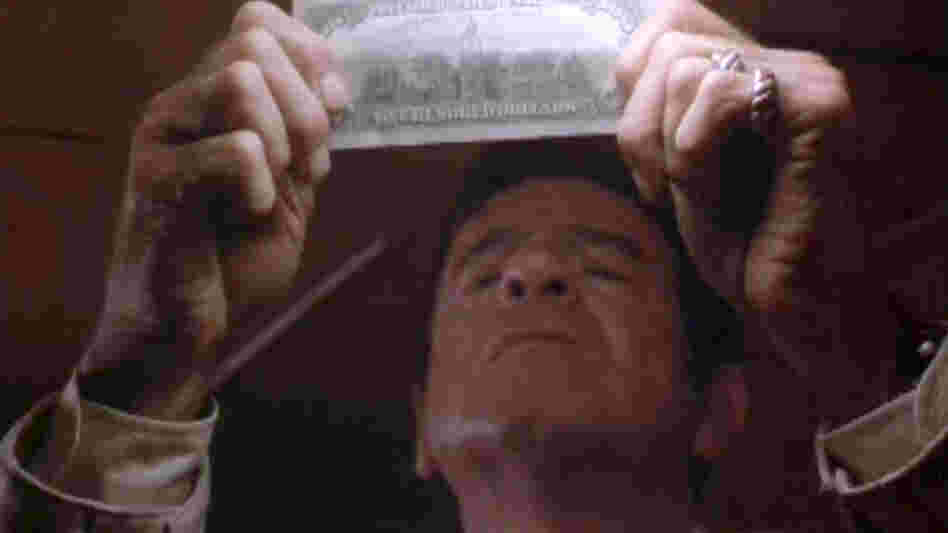
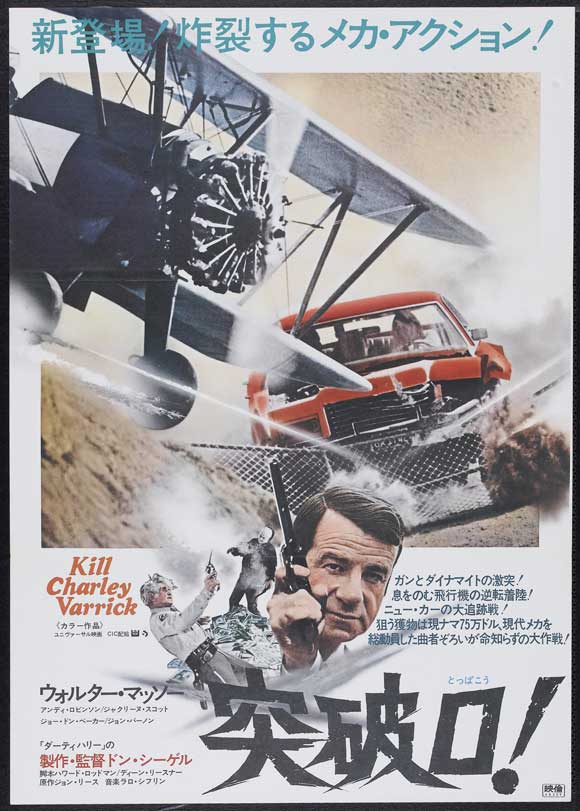
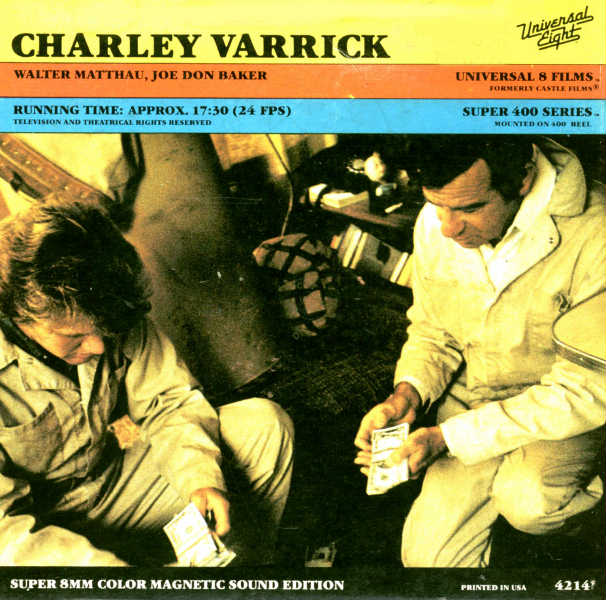
Charley Varrick (1973), but with a funny edge, sort of like
The Bad News Bears (1976). The plaid shirt and yellow tie he wears most of the movie is pretty funny in its own right.
Robert Shaw is cold and menacing as the mastermind of the gang and, along with Matthau, he's the standout of the film. The year before this movie he starred in
The Sting (1973), and immediately following this film he would take his most iconic and enduring role, that of Quint in Steven Speilberg's
Jaws (1975).
Martin Balsam brings a sympathetic quality to the nervous Mr. Green. When talking to Mr. Blue, he claims to have never done anything like this before and is only participating in the hijacking because he was unjustly fired from his job and lost his pension, but even this admission is shaded with doubt as to whether he's telling the full truth or not. Balsam had a long and varied career, from classics like
12 Angry Men (1957) and
Psycho (1960) to minor cult favorites like
Two-Minute Warning (1976) and
The Sentinel (1977).
Mr. Brown has a timidity about him, personified by his stuttering, and his role in the film is relatively minor. Actor Earl Hindman would go on to play Tim Allen's next door neighbor Wilson on long running TV show
Home Improvement. (Admit it. You know who and what I'm talking about).
Héctor Elizondo is quite unhinged as Mr. Grey. He smacks a brother in the face with his gun (while dropping some racial slurs) and gets inappropriate with one of the female passengers. His actions have even the cool Mr. Blue a bit concerned. Nowadays, Elizondo doesn't usually get this rough in movies. He has been in things that your mom and/or your sister have probably seen, like
Pretty Woman (1990),
Runaway Bride (1999), and
The Princess Diaries (2001). As of this writing, he is the only gang member from
The Taking of Pelham One Two Three still living today.
This was Jerry Stiller's first feature film and he would spend much of the 80s and 90s on television, most notably on
Seinfeld, which made him more or less a minor-pop-culture icon. He would co-star with his son Ben Stiller in
Zoolander (2001), which, c'mon, is a pretty funny movie.
Up to this point in his career, Julius Harris had done a bunch of blaxploitation pictures like
Black Caesar and
Hell Up in Harlem (both 1973) and was also Tee Hee in
Live and Let Die (also 1973). Genre fans can see him in
King Kong (1976) and a couple small roles in Sam Raimi films
Crimewave (1985) and
Darkman (1990). He doesn't get much to do in
Pelham One Two Three, but he looks cool wearing sunglasses.
Lee Wallace, who plays The Mayor in this, would also play The Mayor in Tim Burton's
Batman (1989). He also looks a lot like actual New York City Mayor Ed Koch,
circa 1977.
Loud mouthed and sexist Caz Dolowicz was played by Tom Pedi who also played a detective in
The Naked City (1948) and Honest Harry in
The Cat from Outer Space (1978).
Rudy Bond had parts in
A Streetcar Named Desire (1951),
On the Waterfront (1954), and
12 Angry Men (1957). He was also Carmine Cuneo in
The Godfather (1972), the guy who gets trapped in the revolving door and shot to death.
Kenneth McMillian would be promoted from Commander to Commissioner in
Dog Day Afternoon (1975), albeit uncredited. He was also a Constable in
Salem's Lot (1979), a Baron in
Dune (1984), and the shady jerk Cressner in
Cat's Eye (1985; the "Ledge" segment).
Deputy Mayor Tony Roberts, who looks like a smashed together version of Ron Perlman and 70s Elliot Gould, would pal around with Woody Allen in
Annie Hall (1977) and
Stardust Memories (1980) and was also in
Serpico (1973) and
Amityville 3-D (1983).
As Patrolman James, Nathan George spends most of his time in
Pelham One Two Three hiding out on the tracks, watching the hijacked subway car and reporting back with his walkie-talkie. He had a short career, but has memorable supporting roles as Trask in
Klute (1971) and as Washington in
One Flew Over the Cuckoo's Nest (1975).
Dick O'Neill was in
Wolfen (1981) and a boat ton of television shows. Look at that face...you've seen him before.
As you can tell from above, The Taking of Pelham One Two Three is full of great character actors (most of them of the New York variety) in all of the supporting roles. Even though the film cuts between the multiple viewpoints of all these characters spread throughout the city, it still manages to maintain the necessary pace for a tick-of-the-clock thriller. From the moment it starts, the movie races towards its finish and it keeps you guessing until the end.
The Taking of Pelham One Two Three is easily the best Mass Transit thriller ever released (suck it,
Speed) and it is more popular than you might imagine, at least amongst people you've heard of. Quentin Tarantino borrowed the idea of color coded names for the heisters in his debut film
Reservoir Dogs (1992) and seminal NYC hip-hop group
The Beastie Boys name checks the film in their song 'Sure Shot.' So, you know, it's just not me who likes and recommends this movie; famous people do to.
I saw
The Taking of Pelham One Two Three at
The Hollywood Theatre a couple weeks ago. The 35mm print looked great, the crowd dug it, etc. I would've had this write-up done sooner but, you know, it's been unseasonably nice outside and I like sunshine.
Fun Facts:
*You probably are aware that this movie was remade in 2009 by Tony Scott starring Denzel Washington and John Travolta (I've not seen it, but I bet it has lots of shaky editing and Travolta is over-the-top), but did you know there was a remake
before the remake?? Yup, in 1998 there was a TV movie version made with Edward James Olmos, Vincent D'Onofrio, and Donnie Wahlberg.
*For some years after the release of the film, the New York City Transit Authority banned any train from leaving the Pelham station at 1:23.
 |
| Walter Matthau goofing around on set... |
 |
| ....but seriously, check out The Taking of Pelham One Two Three. |